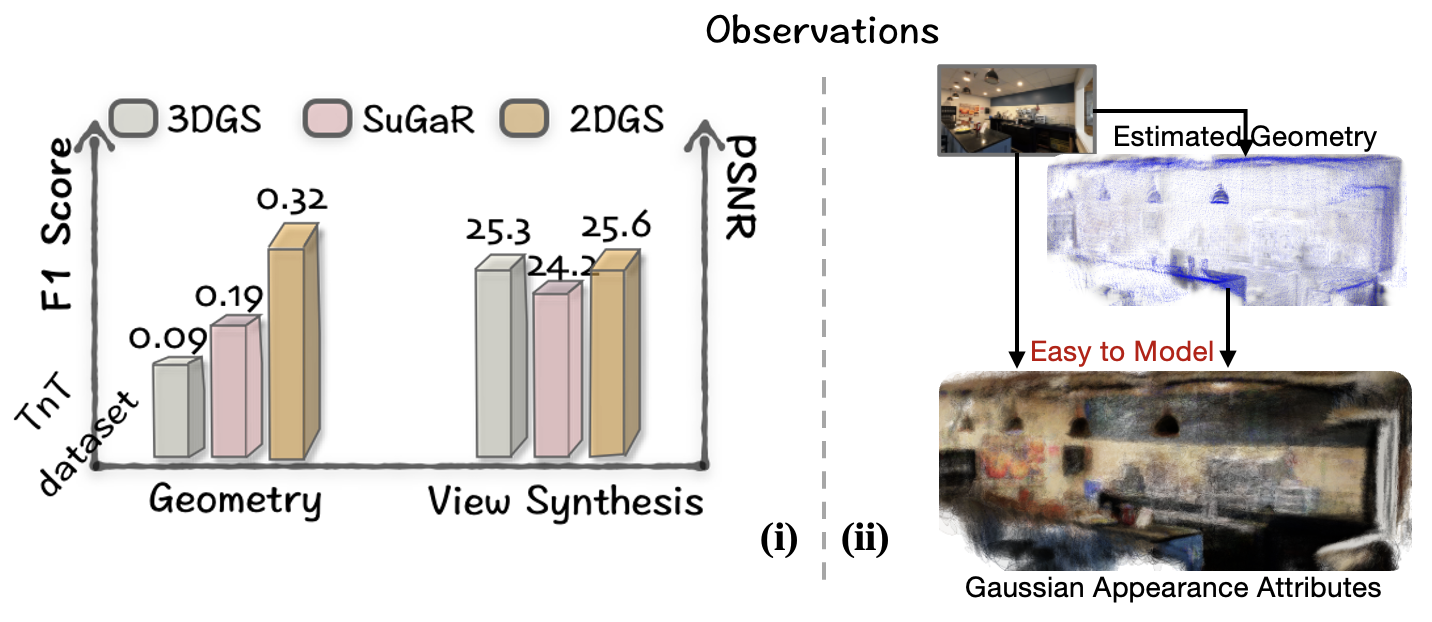
Observations 🧐
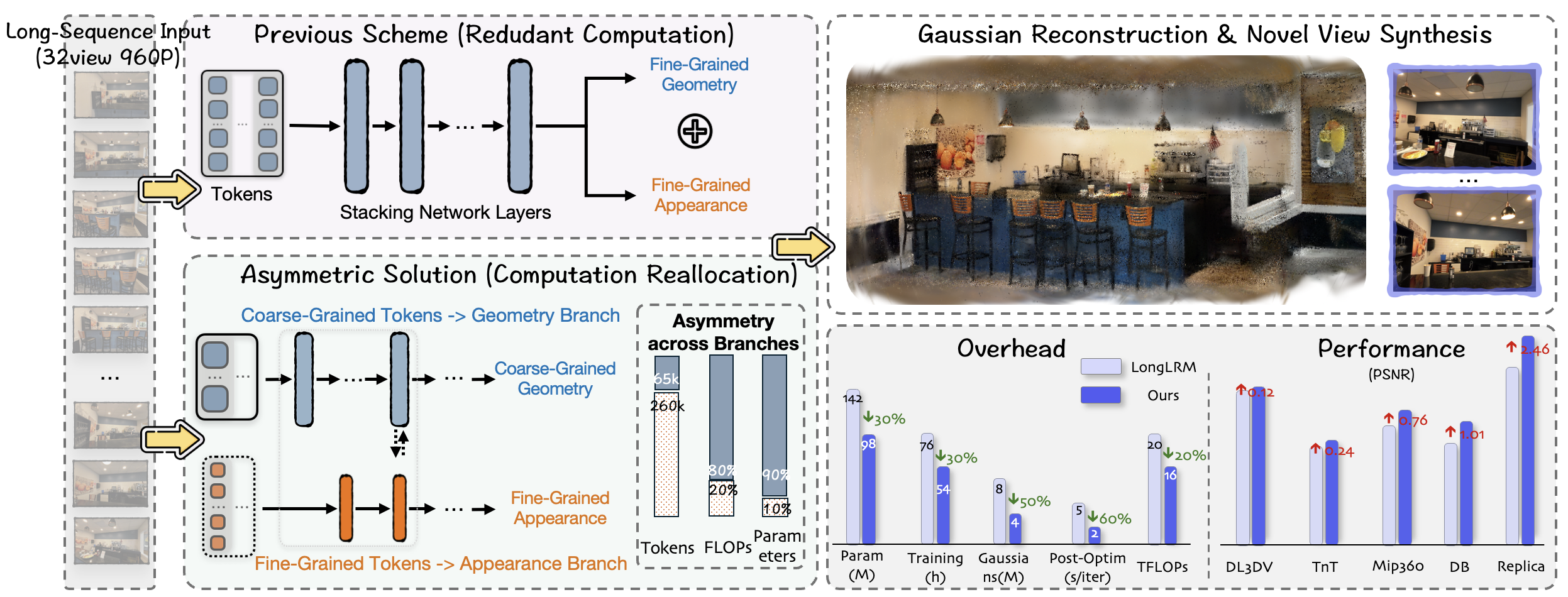
(i) High-precision geometry is not a must for high-quality rendering. (ii) Once geometry is estimated, high-precision appearance attributes are easy to model by assigning pixel-aligned RGB evidence to Gaussians.
Efficient Asymmetric 3D Gaussian Splatting for Long-Sequence Scene Modeling
TL;DR: AsySplat is a novel asymmetric Gaussian reconstruction framework built upon the idea of computation reallocation, comprehensively reducing overhead while achieving modest to substantial performance gains.
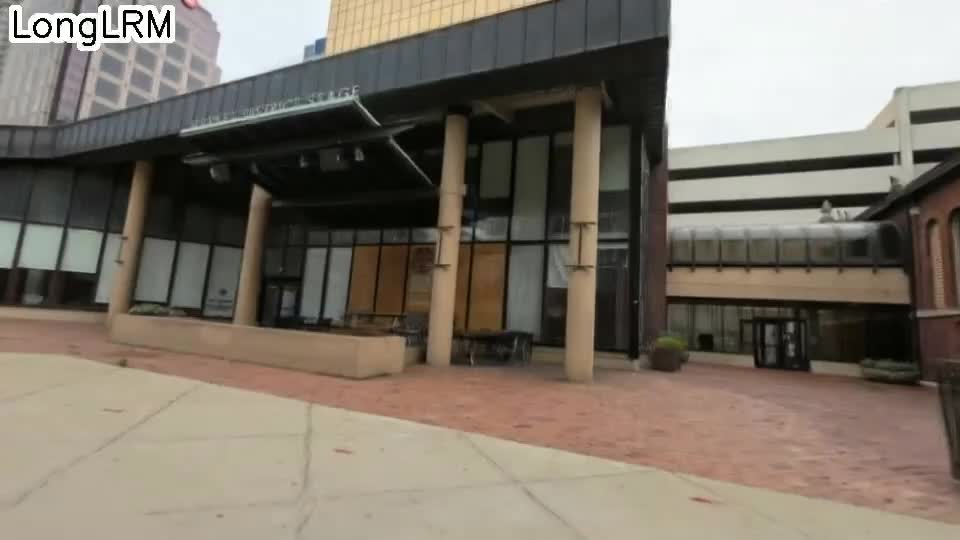
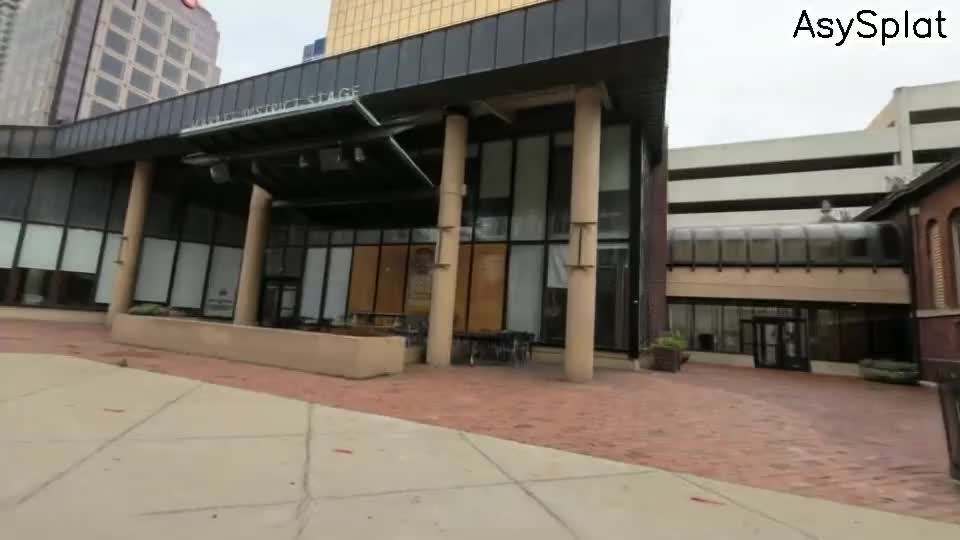
Rendering results on the DL3DV-140 dataset using 32 input images with a resolution of 540×960.
Click a video to open the interactive player with pause and timeline controls.
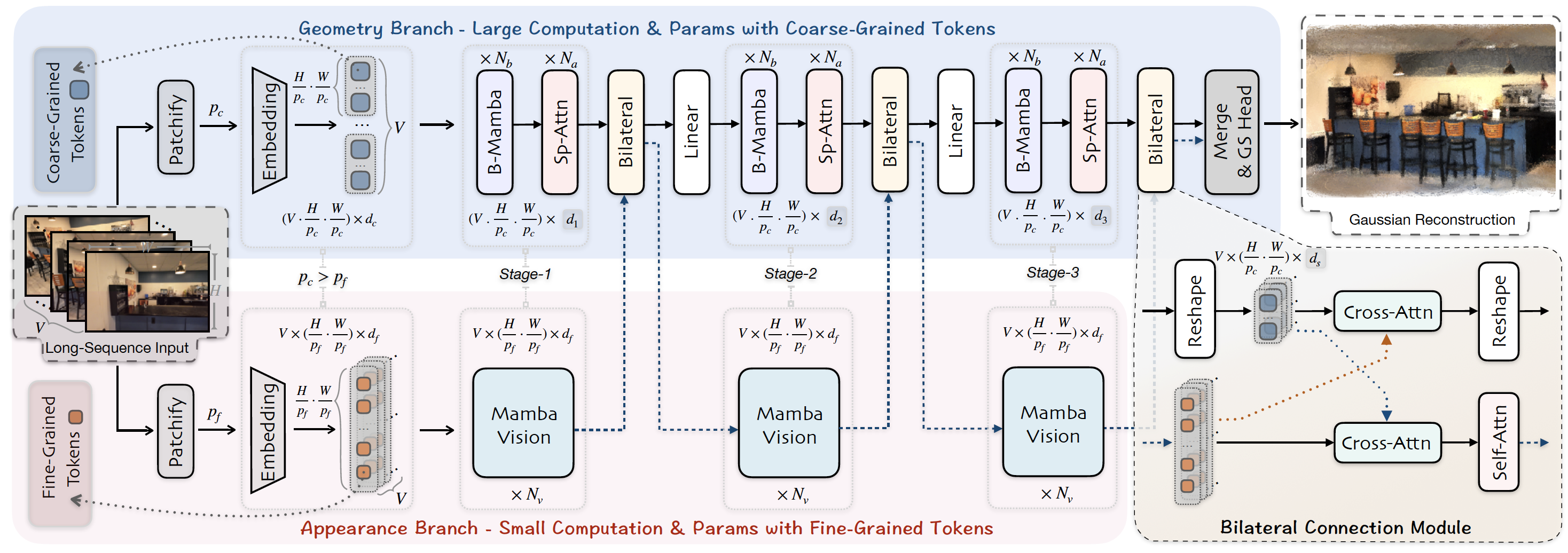
AsySplat is an efficient asymmetric 3D Gaussian Splatting framework for long-sequence novel view synthesis. Recent generalizable 3DGS models advance long-sequence NVS, but often incur substantial redundant computation. We identify two key observations: high-precision geometry is not strictly required for high-quality NVS, and appearance learning is generally easier than geometry recovery. Motivated by these insights, AsySplat decouples geometry and appearance modeling: a geometry branch processes coarse-grained tokens with most parameters for multi-view reconstruction, while an appearance branch operates on fine-grained tokens with significantly fewer parameters to preserve visual details. The two branches interact through bilateral connections, enabling mutual guidance and more judicious computation allocation. On 32-view 960P inputs, AsySplat surpasses previous generalizable models with markedly fewer parameters and reduced training/inference overhead.
Figure 2: The AsySplat framework architecture.
Figure 1: Two observations that lead to the computation reallocation design of AsySplat.
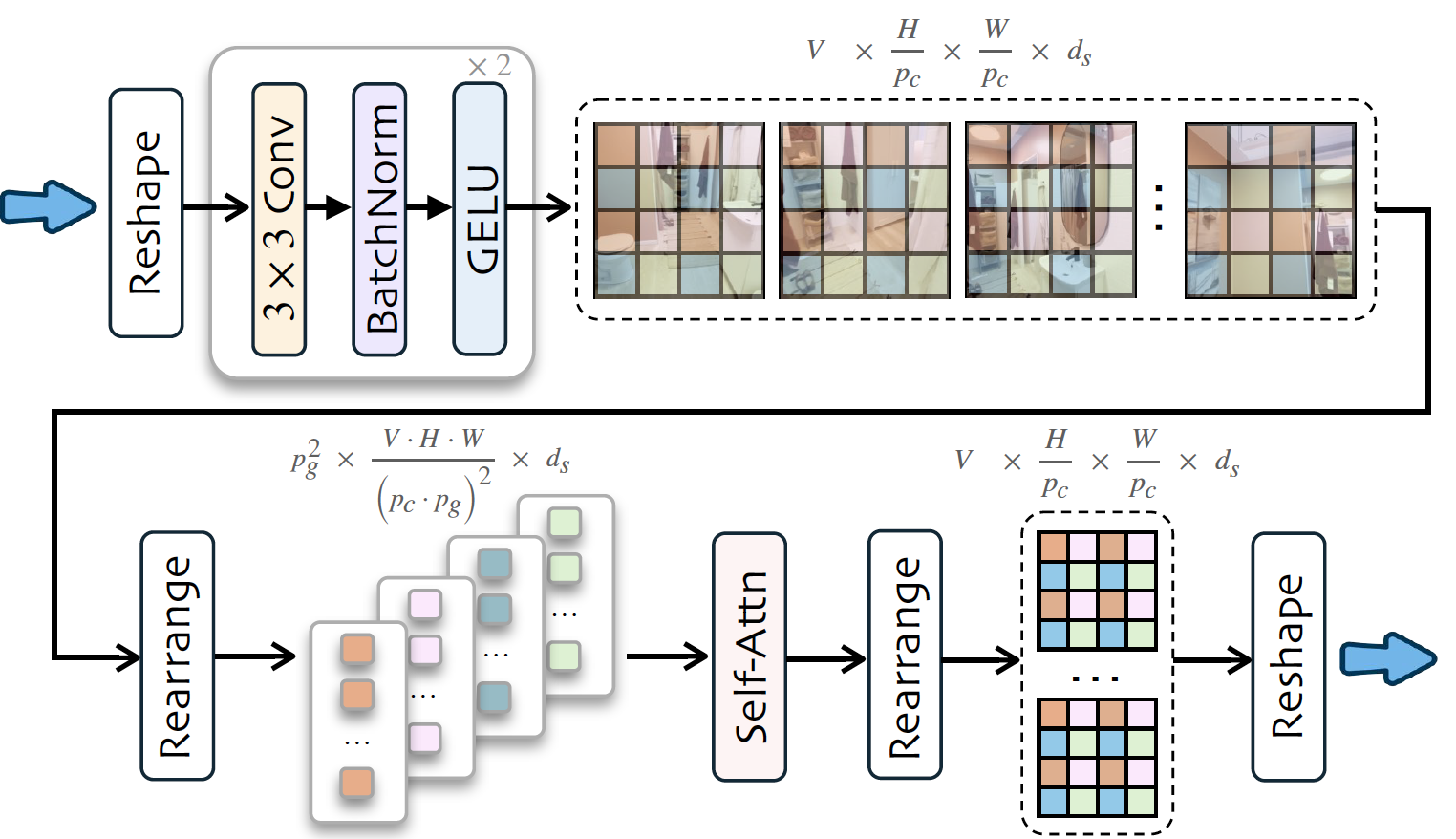
Figure 3: The sparse attention module for training/inference overhead reduction.
(i) High-precision geometry is not a must for high-quality rendering. (ii) Once geometry is estimated, high-precision appearance attributes are easy to model by assigning pixel-aligned RGB evidence to Gaussians.
AsySplat reallocates computation by decoupling the modeling of geometry and appearance into two branches, aligning each with its precision needs and learning difficulty. Asymmetry across branches: token granularities, computation, and parameters.
The proposed sparse attention module combines convolution blocks with self attention to reduce computation overhead while preserving context. The training time is significantly shortened by using the module.
Please note that, in the comparisons below, our method demonstrates both stronger performance and comprehensive overhead reduction, including lower training cost, inference cost, and parameter count.
Except for the comparisons on the Replica dataset, which use 32 input views at 540×744 resolution, comparisons on other datasets are conducted with 32 input views at a 540×960 resolution.
🤝 Drag the slider to compare methods, or click a video to open the interactive player with pause and timeline controls.
The videos below provide comparisons on the MipNeRF-360 and Replica datasets.
The images below provide comparisons on the Tanks&Temples, Deep Blending, and MipNeRF-360 datasets.
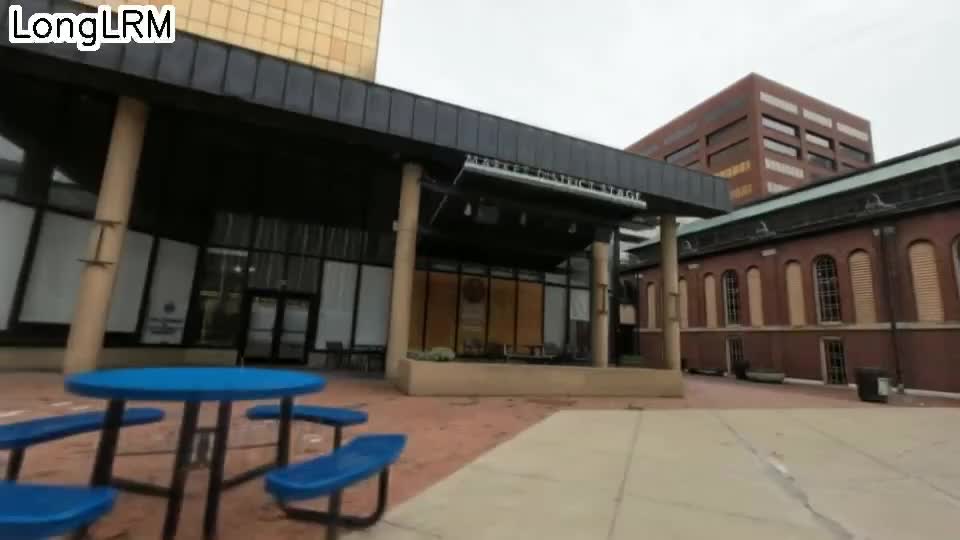
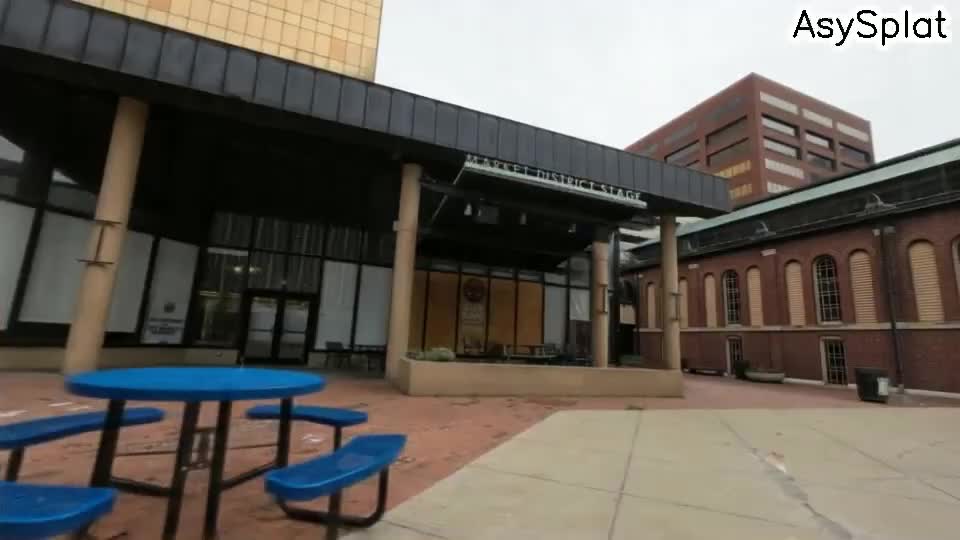
We provide comparisons on the DL3DV-140 dataset. Although two methods achieve close metric on this dataset (with AsySplat showing significantly lower overhead), AsySplat shows advantages visually, especially in preserving fine details.
@inproceedings{
}